EL Programmes
Explore the range of English Language programmes at Jurong West Primary School.
DIGITAL STORYTELLING (DST)
Alignment with the MOE English Syllabus
DST was launched in response to the fast-changing and multi-faceted way of learning in the educational landscape. The programme was aligned to the school’s vision and mission and ICT was employed extensively. To quote Michael Fullen, “Pedagogy is the driver. Technology is the accelerator." We hope to deepen and enhance the writing processes of the students, as well as make writing a pleasurable experience for them. DST is not an add-on. Instead, it is meant as a complement to the school's STELLAR writing programme in alignment with the MOE English Syllabus.
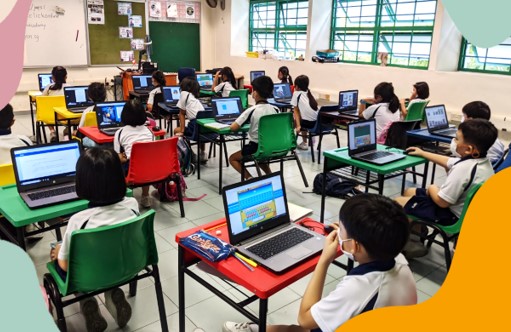
Through DST, the school hopes to enhance competencies across many domains, and expose teachers and students to the possibilities of using Web2.0 tools for teaching and learning. A number of teaching periods were allocated to DST in the Primary 3 English curriculum. Through DST, our students learnt to use tools such as Google Slides, Google Documents, Linoit and PowerPoint to write and share about their experiences. As a form of self-directed learning, students were taught features of recount writing and encouraged to create their own digital stories.
READING CULTURE LIBRARY
Cultivating Love for Reading
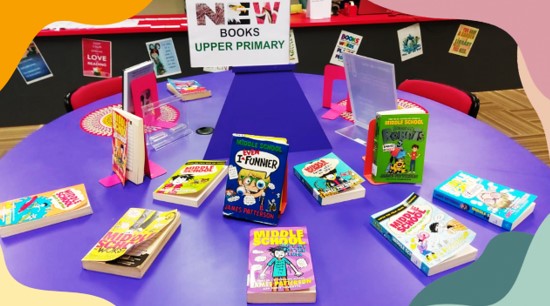
We hope to constantly innovate and develop a cosy and conducive environment for our students to invite them to the world of books. Stories are told often and students are introduced to popular authors in the library. Our library has beautifully-curated thematic book displays to encourage students to explore books based on an array of themes.
Library readership is monitored monthly and certificates are given out to students and classes with the highest readership. To inculcate the habit of reading, the school has implemented a few initiatives. Students are encouraged to read extensively and tokens are given out every term to readers as rewards to encourage them to continue reading. The school hopes to expand the reading experience in our school by collaborating with the National Library Board to bring in more engaging and enriching library programmes for our students.
MyON
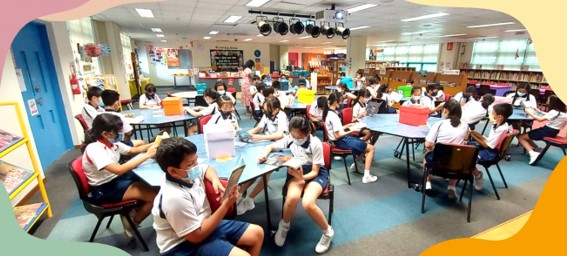
All students in Jurong West Primary school has access to hundreds of digital storybooks through MyON website. The website complements English lesson in class by providing students access to similarly-themed books that can expand students' vocabulary. Two terms in a year, students are scheduled to access MyON in school using school-provided iPads. As students each have username and password for the website, they can take the initiative to read more e-books at home after school too!
Have difficulty reading? Fret not! Students can opt to get the sentences in the book read to them. This way, even students who need more help with reading can get personal help and expand their vocabulary. There are books on different themes and topics as well as books that introduce students to different places in the world. The books provided are updated regularly so there is always a new one for everyone. Through reading the books, students learn to expand their knowledge and take the first step to be responsible for their learning progress.
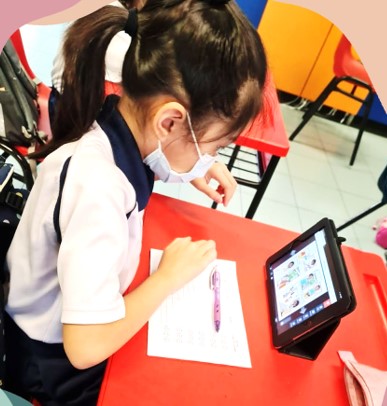
Extensive Reading
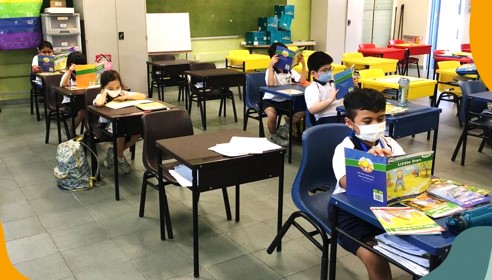
Extensive Reading is conducted once a fortnight for all Primary 1 and Primary 2 LSP students during LSP curriculum time and once a week for selected LSP students outside curriculum time. The objective of Extensive Reading is to provide opportunities for the LSP students to practise and consolidate their reading skills taught during LSP lessons. It also nurtures the reading habit in them. They are provided with a wide range of reading materials which include decodable books, graded readers and trade books. They also get a chance to play early literacy games with their peers.
KidsRead Programme
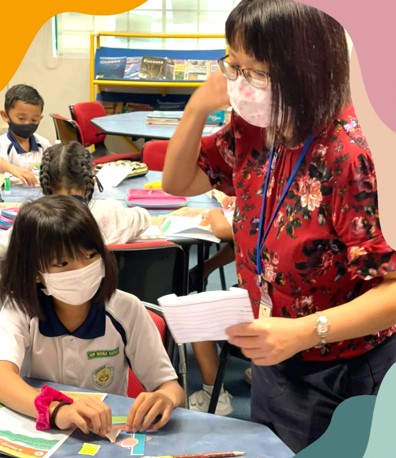
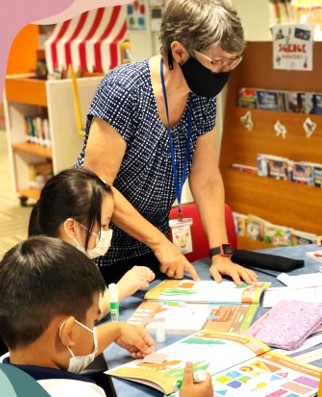
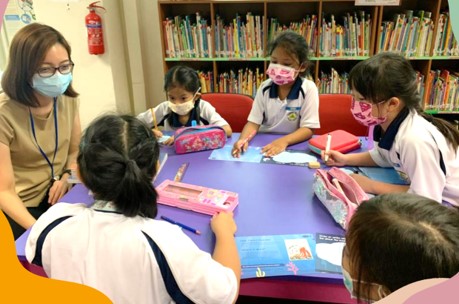
The KidsRead programme at JWPS is conducted in collaboration with National Library Board (NLB). This reading programme aims at cultivating the love of reading in students. The students are engaged in a fun and interactive activities carried out by trained volunteers. During our sessions, the volunteers read stories to the students and use story-related activities to spark students’ imagination and creativity. Here are some pictures of our volunteers, students and teachers in action. Students also get to experience KidsRead via Zoom as part of the school’s effort to integrate ICT into the programme.
LEARNING SUPPORT PROGRAMME (LSP)
Early Literacy Intervention for Primary 1 and 2 Students
LSP is an early literacy intervention programme which aims to provide learning support to Primary 1 and 2 students who have weak language, reading and spelling skills. They are identified for this programme through the Early Literacy Indicators Test which is administered at the beginning of Primary 1. The students are taught by the LSCs, Mrs Margaret Tan and Mrs Thamby, in groups of ten for one period every day.
The curriculum includes the teaching of phonemic awareness, phonics, vocabulary, reading and spelling skills. The students are given much support and encouragement and are taught in a conducive and well-decorated classroom. At the end of the year, students who meet the twin-discharge criteria, namely age-appropriate reading age and a pass in overall English Language, are discharged from the programme. They are awarded certificates of achievement for attaining a pass in the English Language and making progress in their reading.
Learning Support Games Day
All Primary 1 and Primary 2 LSP students will have a chance to participate in creative and team-building activities on the annual Learning Support Games Day. They get the opportunity to apply their knowledge of letter sounds and decoding strategies learnt during LSP lessons as they engage in phonics and word games during the event.
SCHOOL-BASED DYSLEXIA REMEDIATION PROGRAMME (SDR)
Explicit Teaching of Phonemic Awareness, Reading Recognition and Comprehension
SDR is a two-year intervention programme for Primary 3 and Primary 4 students conducted by English Language teachers who have received specialised training. It is a programme especially for students diagnosed with Dyslexia as the development of reading and spelling skills in these students are delayed. SDR explicitly teaches phonemic awareness, higher reading recognition and comprehension within a controlled group. These students are identified for support through a systematic screening process for Dyslexia conducted at the end of Primary 2.
In JWPS, this programme is conducted on every Tuesday to Thursday for one hour throughout the whole year. Following a two-year programme, students display immense improvement in reading and understanding comprehension skills. They are also able to practise the comprehension skills taught in their own learning. Students’ progress and achievements are communicated to their parents regularly and at the end every term, a progress report is given to each student.